The Best Rooftop Tents of 2026: Tried and Tested
There was a time when camping meant sleeping on the ground in a damp nylon coffin while a mysterious rock slowly embedded itself into your spine overnight.
Then somebody had the excellent idea of putting the tent on the roof of the car instead.
And just like that, overlanding changed forever.
Rooftop tents - or RTTs, as the internet insists on calling them - solve several problems at once:
- they get you off muddy ground
- they set up quickly
- they generally sleep better than standard tents
- and they make even the most ordinary campsite feel faintly expeditionary
Of course, they also introduce entirely new problems:
- weight
- wind noise
- terrifying fuel economy
- and the unavoidable reality that climbing down a ladder at 3am for a wee becomes increasingly dangerous after the age of 35.
Still, after years of sleeping in rooftop tents everywhere from African deserts to ferry terminals in France, one thing becomes clear: a good RTT changes how often you actually go outside.
A bad one just turns your vehicle into a very expensive sail.
So here are the best rooftop tents of 2026 - and more importantly, which ones are actually worth strapping to your truck.
Best Overall Rooftop Tent
Roofnest Falcon 3 EVO


The Falcon 3 EVO feels like the rooftop tent equivalent of a well-made Swiss watch. Compact, tidy, aerodynamic and deeply thought through.
Unlike massive soft-shell tents that unfold like a collapsing circus tent in high wind, the Falcon keeps things refreshingly simple. It’s a hard-shell clamshell design, meaning setup takes roughly 30 seconds and almost no emotional resilience.
Which matters enormously when it’s raining sideways in North Wales and your hands have stopped functioning properly.
What’s good
- Excellent aerodynamics for daily driving
- Very fast setup and pack-down
- Surprisingly comfortable mattress
- Strong weather resistance
- Lower profile than most rivals
What isn’t
- Interior space feels tighter than larger fold-outs
- Expensive
- Ladder still has the ergonomic friendliness of a medieval siege device
Real-world verdict
For most people, this is probably the sweet spot.
It balances:
- comfort
- practicality
- weight
- and liveability better than almost anything else right now.
It’s particularly good for people who actually use their vehicle daily and don’t want their fuel economy annihilated every time they exceed 50mph.
Best Budget Rooftop Tent
Topoak Galaxy 1.0


Budget rooftop tents usually involve compromise.
Sometimes lots of it.
Thin mattresses. Questionable hinges. Waterproofing with the structural integrity of kitchen roll.
The Topoak Galaxy 1.0, however, is surprisingly competent for the money. No, it doesn’t feel as polished as premium offerings from James Baroud or iKamper, but it also doesn’t cost the same as a small Mediterranean villa.
What’s good
- Excellent value
- Hard-shell design at lower price point
- Decent interior room
- Surprisingly solid construction
What isn’t
- Heavier than rivals
- Lower quality finish in places
- Long-term durability still a question mark
Real-world verdict
If you’re rooftop tent curious but not emotionally prepared to spend £4,000 on sleeping slightly higher up, this is a strong entry point.
Would I trust it for a six-month Africa expedition? Probably not.
Would I happily use it for UK weekends and European road trips? Absolutely.
Best Air-Inflated Rooftop Tent
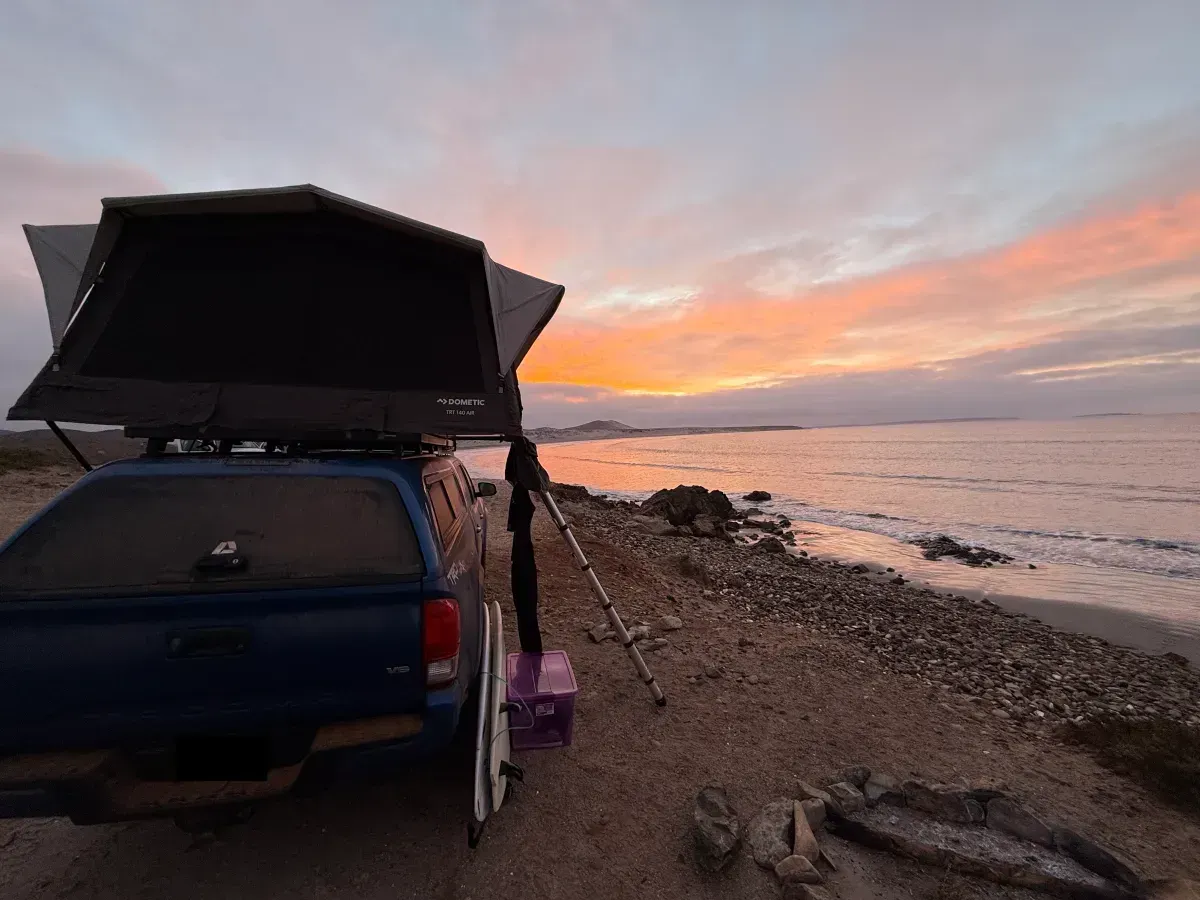
Dometic TRT 140 Air


The first time somebody described an inflatable rooftop tent to me, I assumed civilisation had finally peaked.
And yet the Dometic TRT 140 Air is weirdly brilliant.
Instead of relying on rigid poles, the structure inflates rapidly using air tubes. Which sounds ridiculous until you realise it actually works exceptionally well.
What’s good
- Very comfortable interior feel
- Excellent airflow
- Surprisingly stable in wind
- Quick setup once familiar
What isn’t
- Bulkier than hard-shell tents
- Pumping it up in rain is deeply irritating
- Less confidence-inspiring long-term than traditional systems
Real-world verdict
This is less “hardcore overland expedition” and more:
luxury mobile glamping with genuinely clever engineering.
Perfect for:
- weekend trips
- family touring
- comfortable camping
Less ideal for people regularly crossing remote terrain or living out of the vehicle long term.
Best Soft-Shell Rooftop Tent
Thule Approach M


Soft-shell RTTs are a bit like old Land Rover Defenders.
Objectively less refined. Occasionally annoying. But charming enough that people continue forgiving them anyway.
The Thule Approach M leans heavily into usability. It’s roomy, comfortable and less claustrophobic than many hard-shell alternatives.
What’s good
- Spacious interior
- Comfortable for couples
- Better panoramic feel than clamshells
- Packs relatively small for a soft-shell
What isn’t
- Slower setup
- Worse in strong wind
- Fabric flapping at night can test relationships
Real-world verdict
Soft-shell tents still make sense for people prioritising:
- interior living space
- comfort
- and value over ultimate convenience
But once you’ve experienced hard-shell setup during freezing rain, it becomes difficult to go back.
Best Premium Rooftop Tent
James Baroud Odyssey


The James Baroud Odyssey is what happens when rooftop tents become luxury goods.
Everything about it feels expensive:
- materials
- hinges
- gas struts
- fabric quality
- even the zips sound wealthier somehow
And annoyingly, it’s excellent.
What’s good
- Exceptional build quality
- Superb weather resistance
- Excellent ventilation
- Fast setup
- Quiet in strong wind
What isn’t
- Costs an absurd amount of money
- Heavy
- You’ll become insufferably smug owning one
Real-world verdict
This is probably one of the best RTTs money can buy.
The issue is simply that it requires quite a lot of money.
Still, if you spend:
- dozens of nights a year outside
- travel long-term
- or simply hate compromising
the Odyssey starts making uncomfortable financial sense.
Best Rooftop Tent for Serious Overlanding
iKamper BDV Duo


The iKamper BDV Duo feels purpose-built for people who say things like:
“We’ll just drive until the road stops.”
This is a genuinely expedition-focused RTT with serious durability and modular capability.
What’s good
- Extremely robust
- Great weather resistance
- Excellent mounting ecosystem
- Designed around long-term use
What isn’t
- Expensive
- Heavy
- Overkill for casual campers
Real-world verdict
If your idea of camping involves:
- remote tracks
- multiple countries
- and long periods off-grid
then the BDV Duo makes tremendous sense.
If your adventures mostly involve a National Trust car park and a bacon sandwich, it may be slightly unnecessary.
Best Rooftop Tent for Multi-Sport Trips
Thule Tepui Foothill


This is one of the cleverest RTT designs currently available because it acknowledges something many tents ignore: people often want roof space for other things.
Bikes.
Kayaks.
Boards.
Skis.
The Foothill folds compactly to one side of the roof, leaving room for additional gear.
What’s good
- Excellent compact footprint
- Leaves roof rack space free
- Lightweight
- Smart design
What isn’t
- Narrow sleeping space
- Less luxurious than larger tents
- Better for solo travellers than families
Real-world verdict
Perfect for:
- mountain bikers
- surfers
- climbers
- multi-sport trips
Less ideal if you prioritise pure sleeping comfort above all else.
Final thoughts
The truth about rooftop tents is that none of them are perfect.
Some are:
- more aerodynamic
- more comfortable
- easier to deploy
- or better in harsh weather
But every RTT is ultimately a compromise between:
- weight
- convenience
- space
- durability
- and cost
The important thing is matching the tent to the type of travel you actually do — not the fantasy version you imagine while watching expedition films on YouTube at midnight.
Because the best rooftop tent isn’t necessarily the most expensive one.
It’s the one that makes you want to keep driving somewhere interesting long after everyone else has gone home.